
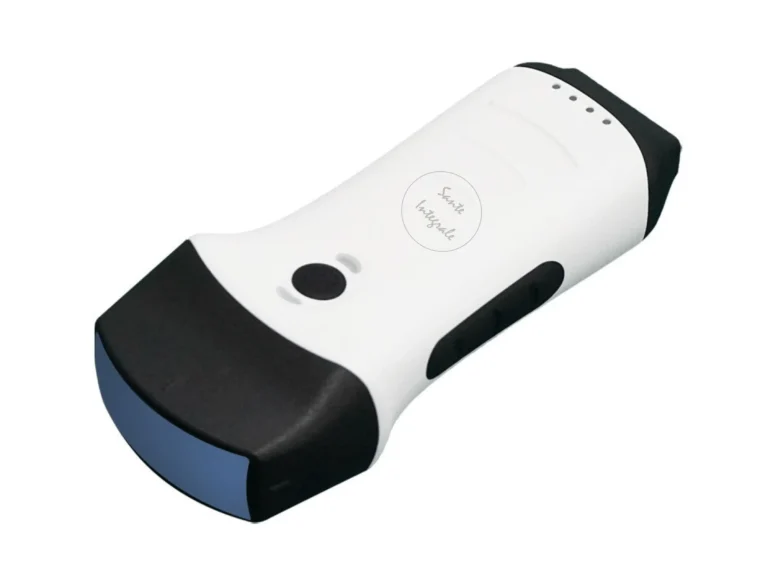
The introduction of POCUS (Point-of-Care Ultrasound) on the primary link complements the patient’s traditional review by ultrasound assessment. Modern wireless sensors transmit images to a compatible smartphone or tablet, so it is convenient to use them in the office, between rooms and during the on-site reception.
For a family doctor, POCUS can help answer a specific clinical question more quickly and clarify further tactics. At the same time, a specialized study does not replace a full-fledged expert ultrasound diagnosis, and the quality of the result depends on the training of a specialist, protocol and equipment capabilities.
Clinical scenarios at the initial reception
Systematic reviews describe the use of POCUS by doctors of general practice for the study of the organs of the abdominal cavity and small pelvis, lungs, heart, vessels, soft tissues and musculoskeletal system. A specific list of studies should comply with the competencies of the doctor and local clinical protocols.
Evaluation of the abdominal cavity and urinary system
Convex or universal sensor can be used to evaluate the free fluid, bladder, kidneys and gallbladder. The detected sign is not a statistical diagnosis: it must be evaluated together with complaints, history, examination and other studies.
Ultrasound of the lungs
Focused lung research is used to find pleural effusion, B-lines and other ultrasound features. The interpretation depends on the clinical context, and the absence of a separate sign does not exclude the disease.
Vessels and soft tissues
Linear sterile sensor helps to visualize surface structures, vessels and soft tissues. Ultrasound control of procedures requires separate training, aseptics and approved protocols.
Key criteria for choosing a sensor
- Type of sensor. Linear is suitable for surface structures and vessels, convex - for deeper organs of the abdominal cavity and small pelvis, phased - for cardiac windows. Systems "3 in 1" combine several formats in one body.
- Compatibility. Check supported versions of iOS, Android or Windows, data transfer method, connection stability and the ability to safely export research.
- Autonomy. Evaluate not only the stated time of work, but also the duration of charging, standby behavior and the ability to work during your typical reception.
- Image quality and modes. Compare sensors on your own clinical scenarios: important depths, frequency range, Doppler modes, frame rate, and ease of control.
- Cleaning and disinfection. The body protection class, in particular IP68 in some models, does not replace the manufacturer's instructions. Use only the allowed methods and means of processing and take into account the chemical compatibility of the materials.
- Training and service. The cost of ownership includes training, warranty, technical support, software updates and repair availability.
Economic feasibility
The wireless sensor usually requires less space and can have a lower threshold of initial costs than a full-size stationary system. However, the economic result depends on the clinical load, staff training, cost of compatible devices, service and how POCUS is integrated into the patient’s route.
Evidence of the impact of POCUS in general practice remains inhomogeneous. Therefore, it is advisable to determine the list of clinical tasks, the number of users, requirements for documentation and the expected frequency of use before purchasing it.
Practical conclusions
- Start not with the sensor model, but with well-defined clinical questions.
- A universal system can be convenient for a wide range of tasks, but a specialized sensor sometimes provides better ergonomics or detail.
- Check compatibility, autonomy, processing, data storage and service before purchase.
- Before clinical use, training, assessment of competence and work on approved protocols are necessary.
Need a system for your practice?
EchoMedica will help you to compare the configuration of wireless ultrasound probes, conduct diagnostics and choose solutions for your clinical problems.
Request a consultationSources
- WONCA Europe: Position paper on the use of POCUS in primary care.
- EFSUMB: Guidelines and recommendations, including POCUS in primary care.
- Andersen C.A. et al. Point-of-Care Ultrasound in General Practice: A Systematic Review. Annals of Family Medicine, 2019.
- Sorensen B., Hunskaar S. Point-of-care ultrasound in primary care: a systematic review. Ultrasound Journal, 2019.